FPS & Shooter Games
First-person shooters have anchored competitive gaming for over 30 years, from the foundational work of Doom and Quake through to the live-service dominance of Counter-Strike 2, Valorant, and Apex Legends. The genre remains one of gaming's most commercially powerful, continuously evolving through new subgenres — extraction shooters, hero shooters, tactical sims — while its competitive scene drives some of esports' largest prize pools and audiences.
 100
100Grand Theft Auto V
 100
100Grand Theft Auto V: Story Mode
 100
100Oxide: Survival Island
 100
100Rocket Riot
 100
100Robotron X
 100
1003D Starstrike
 100
100Destiny: The Taken King - Legendary Edition
 100
100Saints Row IV: Super Dangerous Wad Wad Edition (aka the Million Dollar Pack)
 99
99Grand Theft Auto V: Special Edition
 99
99San Andreas Multiplayer
 97
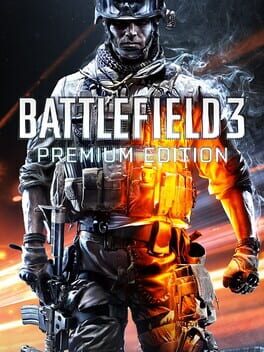
97Battlefield 3: Premium Edition
 97
97Lurkers
 97
97Jurassic Park
 97
97Life Force
 97
97Creatures
 96
96Super Metroid
 96
96Kirka.io
 96
96Action Fighter
 96
96FiveM
 96
96Population: One
 96
96Ghosts of Tabor
 96
96Tom Clancy's Ghost Recon: Breakpoint - Red Patriot
 96
96Shadow Warrior 3: Definitive Edition
 95
95The Last of Us Remastered
 95
95Metal Gear Solid 3: Subsistence
 95
95Metal Gear Solid 3: Snake Eater - HD Edition
 95
95Hunter Moonstrike
 95
95I Wanna Maker
 95
95Sektori
 95
95Remnant II: The Awakened King
 94
94Red Dead Redemption 2
 94
94Metroid Prime
 94
94The Binding of Isaac: Repentance
 94
94SOCOM II: U.S. Navy SEALs
 94
94A Twisted Path To Renown
 93
93Mass Effect 2
 93
93The Last of Us Part II
 93
93Mass Effect Trilogy
 93
93Resident Evil 4
 93
93Half-Life: Alyx
 93
93System Shock
 93
93Superfighters Deluxe
 93
93Death Stranding 2: On the Beach
 93
93Grand Theft Auto V: Premium Online Edition
 93
93Metal Gear Solid: The Legacy Collection
 93
93Hrot
 93
93FortressOne
 93
93Samurai Aces for Nintendo Switch
The Competitive FPS Landscape in 2026
Counter-Strike 2, Valve's updated version of the series that has defined competitive tactical shooting since 2000, holds its position as the most-played competitive FPS on PC. The 2023 transition from CS:GO to CS2 brought modern rendering, improved tick rates, and overhauled networking — but the core game remained essentially unchanged, which is testament to how durable the original design has proven.
Valorant, Riot Games' tactical shooter launching in 2020, challenged CS for the first time in years by combining CS-style bomb plant/defuse structure with hero abilities. Its success — tens of millions of active players, a thriving esports circuit — demonstrated that the formula could absorb new elements without losing its competitive integrity. Valorant's agent system creates a meta-game layer around team composition that CS's equipment-only approach doesn't have.
ARC Raiders: The 2026 Multiplayer Standout
ARC Raiders from Embark Studios won Best Multiplayer Game at The Game Awards and sold 8 million copies — a breakout achievement for the Stockholm-based studio. The game's extraction shooter mechanics combined with third-person/first-person hybrid play and polished cooperative design made it one of 2026's most discussed releases and demonstrated that the extraction shooter subgenre, pioneered by Escape from Tarkov, had reached mainstream commercial viability.
Campaign Shooters: A Different Proposition
Not all FPS games are multiplayer-first. Campaign shooters — Doom Eternal, Wolfenstein: The New Order, BioShock, Metro Exodus, Titanfall 2 — are complete single-player experiences that don't depend on active player populations or developer support beyond initial release. Their quality doesn't degrade with time; a great campaign is great indefinitely.
Titanfall 2 remains the most commonly cited example of a campaign shooter that exceeded its multiplayer's commercial reception: universally praised by critics and players who finished it, yet commercially underperforming due to its release date between Battlefield 1 and Call of Duty: Infinite Warfare. Played today, it remains one of the most kinetically satisfying FPS campaigns ever made.
Insomniac — wait, that's Sony — but among campaign FPS highlights: Halo: Infinite's campaign, Indiana Jones and the Great Circle (which won Game Awards for narrative), and id Software's Doom series demonstrate that single-player shooters command serious critical attention when executed well.
Subgenres That Have Reshaped the Category
The FPS umbrella now covers dramatically different play experiences. Battle royale shooters — Apex Legends, Warzone, Fortnite's BR mode — brought survival game tension into FPS structure, producing games where the stakes of each match are higher because only one player or team wins. Hero shooters like Overwatch 2 and Paladins assign fixed ability sets to selectable characters, creating team composition meta-games on top of gunplay fundamentals.
Extraction shooters — Escape from Tarkov, Hunt: Showdown, and now ARC Raiders — add permanent loss of equipment to the equation. You bring gear into a match; if you die, you lose it. This fundamentally changes player psychology compared to standard competitive modes, creating tension and decision-making that straight deathmatch doesn't produce.
Immersive sims — Prey, Dishonored, Deus Ex — use FPS framing for systemic games where shooting is just one of many approaches to every encounter. These are among the most design-dense games in any category.
Valorant's Competitive Rise
Riot Games' Valorant has become the second dominant competitive FPS on PC in less than five years since its 2020 launch. By adapting Counter-Strike's bomb plant/defuse structure and adding hero abilities, Valorant created a game with tactical shooter foundation and MOBA-style character selection meta. The combination attracted both CS veterans who wanted the familiar gunplay rhythm and new players drawn in by the character roster and Riot's free-to-play model.
Valorant's esports circuit — the VCT (Valorant Champions Tour) — runs regional leagues across the Americas, EMEA, and Pacific, with an annual Champions tournament that draws viewership comparable to CS's Major events. The investment in professional infrastructure has given the game competitive legitimacy that it converted from player count into revenue through cosmetics.
Battlefield and the Live Service Challenge
Battlefield 2042's troubled 2021 launch illustrated the risks of live service shooter development: a game that shipped with missing features from prior entries, received a prolonged critical mauling, and required over a year of updates to reach what should have been its launch state. EA's willingness to continue development rather than abandon the product eventually produced a more stable game, but the initial impression damage proved irreversible.
The lesson from Battlefield 2042 — that multiplayer shooters live or die on launch quality, and that the audience for a damaged product moves on quickly — has influenced how subsequent shooters are positioned and what their launch state needs to be. ARC Raiders' strong 2026 reception partly reflects how well Embark Studios managed expectations and launch quality against this context.
The Netcode Revolution
The adoption of rollback and improved lag compensation across more FPS games has made competitive online play meaningfully more fair than it was five years ago. Server-side hit registration, higher tick rates (128 vs 64 per second), and better anti-cheat systems (Valorant's Vanguard, CS2's VAC improvements, Riot's approach to competitive integrity) have narrowed the gap between offline and online competitive play for most players.
Geographic latency remains the irreducible variable — playing against opponents on different continents produces a fundamentally different experience than regional matchmaking. Regional servers across major FPS titles have expanded significantly, making sub-50ms latency achievable for most players in populated regions.
Browse our FPS collection on pcforest.net by rating to find both the competitive multiplayer benchmarks and the campaign titles that critics ranked highest. The genre's range — from meditative immersive sims to anarchic battle royales — means the best FPS for you depends entirely on what kind of challenge you're seeking.