Horror Games
Horror games use the interactive medium's unique property — player agency and responsibility — to create dread that passive media can't manufacture. You aren't watching someone else be scared; you're the person deciding whether to open the door. The genre has never been more creatively diverse, from Konami's ambitious Silent Hill revival to the surprise multiplayer phenomenon REPO and the atmospheric terror of games like Still Wakes the Deep.
 100
100Bubsy 3D: Bubsy Visits the James Turrell Retrospective
 100
100Bloodborne: Complete Edition Bundle
 100
100Arches
 100
100Bloodborne: The Old Hunters Edition
 99
99Terraria: Calamity Mod
 98
98Umineko no Naku Koro ni Chiru
 98
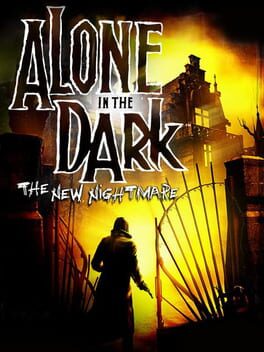
98Alone in the Dark: The New Nightmare
 98
98Love Eternal
 97
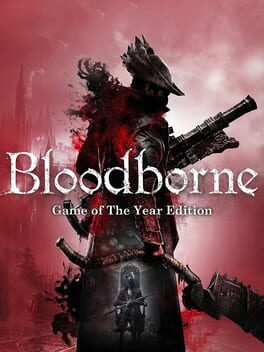
97Bloodborne: Game of the Year Edition
 97
97Animal Company
 97
97Lurkers
 97
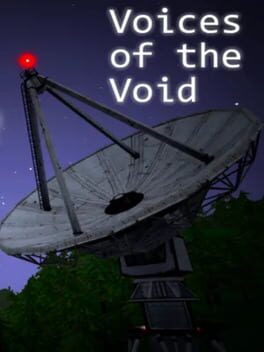
97Voices of the Void
 96
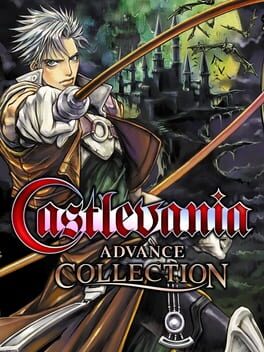
96Castlevania Advance Collection
 96
96Pinball M
 95
95The Last of Us Remastered
 95
95Hunter Moonstrike
 95
95Umineko When They Cry: Answer Arcs
 95
95The House in Fata Morgana: A Requiem for Innocence
 94
94The Binding of Isaac: Repentance
 94
94Faith
 94
94Echo
 94
94Doodle Date
 93
93The Last of Us Part II
 93
93Resident Evil 4
 93
93Death Stranding 2: On the Beach
 93
93Enigma of Fear
 93
93Silent Hill 2
 93
93Hrot
 92
92The Last of Us
 92
92Castlevania: Symphony of the Night
 92
92S.T.A.L.K.E.R. G.A.M.M.A.
 92
92The Binding of Isaac: Repentance
 92
92Underhell
 91
91Undertale
 91
91Bloodborne
 91
91Silent Hill 2
 91
91The Binding of Isaac: Rebirth
 91
91Bloodborne: The Old Hunters
 91
91TimeSplitters 2
 91
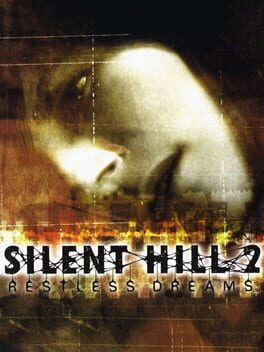
91Silent Hill 2: Restless Dreams
 91
91Vintage Story
 91
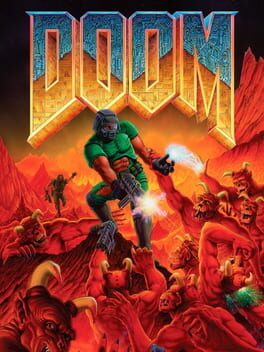
91Doom
 91
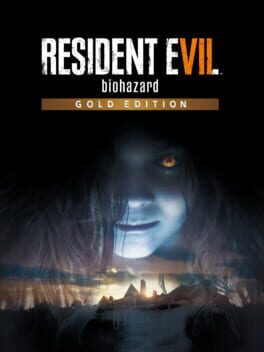
91Resident Evil 7: Biohazard - Gold Edition
 91
91Limbus Company
 91
91The Binding of Isaac: Antibirth
 91
91Tsukihime: A Piece of Blue Glass Moon
 91
91Umineko When They Cry: Question Arcs
 90
90BioShock
Why Horror Works Differently in Games
The interactive element transforms horror in a fundamental way. In a film you can pause, look away, or acknowledge intellectually that the sequence will end. In a game, pausing means your character freezes in the dark. Every sound you hear is information your character would also hear; every decision you make carries physical consequences in the game world. The responsibility for movement and decision-making creates investment in outcomes that passive horror media can't manufacture.
Amnesia: The Dark Descent (2010) understood this and built its systems explicitly around the player's desire to avoid danger rather than fight it. No combat; only hiding and running. The sanity mechanic — look at monsters too long and your character's mental state deteriorates — created a feedback loop between player anxiety and game state that remains one of horror game design's most effective tricks. Games like Outlast and Outlast 2 extended this approach to increasingly extreme settings.
2025's Horror Highlights
Silent Hill f was one of 2025's most anticipated horror releases — set in 1960s Japan, it represented a dramatic departure from the series' Pacific Northwest and European settings while retaining Silent Hill's core vocabulary of psychological horror, body horror imagery, and fog-drenched environmental unease. The Japanese setting gave developer Neobards Entertainment (working with Konami) a distinct visual and cultural palette that the previous remakes and new entries hadn't accessed.
REPO became the surprise multiplayer horror hit of 2025. The cooperative nature of REPO — players working together through horror scenarios with emergent comedic and terrifying moments — demonstrated that horror's interactive power scales interestingly to co-op: the fear of something happening to a friend you're responsible for adds a layer that single-player horror can't replicate.
Still Wakes the Deep from The Chinese Room placed oil rig horror against the North Sea with environmental storytelling and sound design that received particular critical praise. Dying Light: The Beast, Look Outside (pixel art horror that critics found genuinely unsettling despite its presentation), and various other 2025 entries expanded the genre's palette.
2026: Resident Evil Returns and New Entries
A new Resident Evil featuring Leon Kennedy is targeting 2026, carrying enormous anticipation from the series' fanbase. Leon's history in the series — RE2, RE4 Remake, the CGI films — makes him one of gaming's most recognisable horror protagonists, and Capcom's recent track record (RE2 Remake, RE Village, RE4 Remake) has been exceptional.
Who Are You!?, The Occultist, and Immortum represent the broader 2026 horror pipeline — indie and mid-tier entries targeting different tonal registers from psychological thriller to full supernatural horror. The indie horror scene has been particularly active, with small teams producing games that receive disproportionate critical attention for their atmospheric achievement relative to budget.
Survival Horror's Commercial Resilience
Resident Evil Village (2021) selling over 10 million copies demonstrated that survival horror, properly executed, is a commercially viable AAA proposition. The series had previously been considered a niche franchise in comparison to action-shooter blockbusters; Village's sales proved that the audience for scary games with production quality matches that for action games with similar budgets.
Dead Space Remake (2023) from Motive Studio demonstrated that survival horror classics can be rebuilt for current hardware with the right level of reverence and creative extension. The remake updated the visual and audio presentation while preserving the original's oppressive atmosphere and sound design — the plasma cutter against necromorphs remains one of gaming's most distinctive combat sounds.
The Resident Evil Renaissance
Capcom's Resident Evil series has been in one of its best creative periods in franchise history since the Resident Evil 7 reboot in 2017. RE7 returned to first-person horror after years of action-heavy entries, recapturing the series' tension through resource scarcity and environmental threat. RE2 Remake (2019, 91 Metacritic) reimagined the classic PS1 game with over-the-shoulder third-person gameplay while preserving its puzzle structure and oppressive atmosphere. RE Village (2021) pushed toward gothic horror and action spectacle while maintaining the survival horror resource management that defines the franchise.
RE4 Remake (2023, 93 Metacritic) took one of gaming's most influential titles and rebuilt it for modern standards while preserving the mechanical innovations that made the original revolutionary: the over-the-shoulder camera, context-sensitive actions, merchant system, and inventory management that defined action-horror for a generation. The new Resident Evil with Leon Kennedy targeting 2026 arrives with expectations set by this track record — Capcom has delivered on the RE Remake series consistently enough that anticipation is justified.
Horror's Subgenre Spectrum
Some of the most acclaimed horror games succeed primarily through atmosphere rather than mechanical threat. Soma (Frictional Games, 2015) creates existential dread through its philosophical questions about consciousness and identity without relying on combat. INSIDE's wordless descent is genuinely unsettling despite its sparse mechanics. If jump scare-heavy games exhaust rather than entertain you, this wing of the genre provides genuine unease through slower means.
At the action horror extreme — Alan Wake 2 (2023, 89 Metacritic), The Evil Within 2, Dead Space Remake — the tension comes from resource pressure and enemy threat alongside horror framing. Alan Wake 2's metafictional structure, live-action sequences, and full musical number within gameplay made it unlike any other horror game and unlike most games in any category.
Browse our horror games collection on pcforest.net by rating to find both the survival horror benchmarks and the atmospheric titles that critics found most genuinely effective — the genre's range is wide enough that the right horror game for you depends entirely on what kind of fear you're looking for.