Sandbox Games
Sandbox games prioritise player agency above all else: the tools are provided; the goals are yours to set. From Minecraft's infinite procedural worlds to Garry's Mod's improvised physics scenarios to Dwarf Fortress's unfathomable simulation depth, sandbox games are defined by what players make of them rather than what the developers scripted. The most enduring examples generate stories no designer anticipated.
 100
100Resonite
 100
100Oxide: Survival Island
 100
100The Legend of Zelda: Breath of the Wild - Nintendo Switch 2 Edition
 100
100The Legend of Zelda: Tears of the Kingdom - Nintendo Switch 2 Edition
 100
100Dawnfolk
 100
100Saints Row IV: Super Dangerous Wad Wad Edition (aka the Million Dollar Pack)
 99
99Terraria: Calamity Mod
 97
97Lurkers
 97
97Voices of the Void
 95
95The Legend of Zelda: Breath of the Wild
 95
95Final Fantasy III
 95
95The Elder Scrolls IV: Oblivion - Game of the Year Edition Deluxe
 95
95tModLoader
 95
95LittleBigPlanet: Game of the Year Edition
 95
95Stardew Valley: Collector's Edition
 94
94The Legend of Zelda: Tears of the Kingdom
 94
94A Twisted Path To Renown
 94
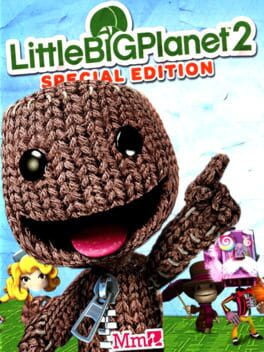
94LittleBigPlanet 2: Special Edition
 94
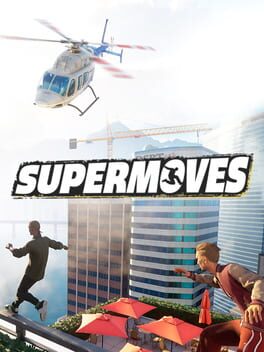
94Supermoves: World of Parkour
 93
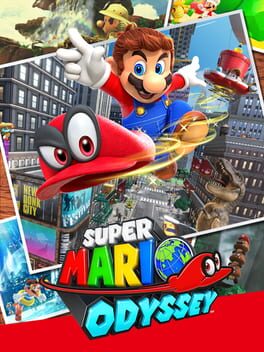
93Super Mario Odyssey
 93
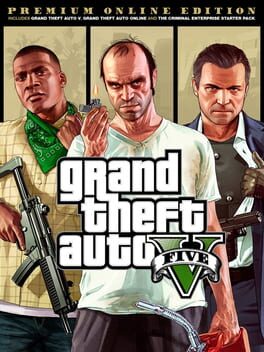
93Grand Theft Auto V: Premium Online Edition
 93
93Town Star
 93
93Neko Atsume: Kitty Collector
 93
93Pokémon Pokopia
 93
93Space Station 13
 93
93Palia: The Elderwood
 92
92The Legend of Zelda: Ocarina of Time
 92
92S.T.A.L.K.E.R. G.A.M.M.A.
 92
92Cyberpunk 2077: Phantom Liberty
 92
92Cyberpunk 2077: Ultimate Edition
 92
92Star Citizen
 92
92Ashen Sky
 92
92RoadCraft
 92
92Starsector
 92
92Arma Reforger
 92
92Factorio: Space Age
 92
92Shadow Gambit: Zagan's Ritual
 92
92Hide The Corpse
 91
91Grand Theft Auto: Vice City
 91
91Red Dead Redemption
 91
91Fallout 3: Game of the Year Edition
 91
91Tactics Ogre: Let Us Cling Together
 91
91Vintage Story
 91
91Dreams
 91
91Lichess
 91
91Shapez 2
 90
90Grand Theft Auto III
 90
90The Legend of Zelda: A Link Between Worlds
Defining the Sandbox: Agency Without Direction
The sandbox label gets applied loosely to many games that have open-world elements or large play spaces. The genuine sandbox is narrower: a game that gives you systems and largely removes directed goals. Minecraft is the canonical example — the world generates, tools are available, and whether you build a faithful recreation of a real city or spend a thousand hours mining for diamonds are equally valid expressions of the game's purpose. No progress bar demands completion; no narrative pushes you in one direction.
This self-direction is both the format's greatest strength and its barrier to entry. Players who thrive in sandbox games are those who generate their own goals — who decide to recreate a film set, or build a fully functional railway network, or establish a villager economy with controlled resource flows. Players who find games without directed purpose frustrating will struggle to engage with pure sandboxes in the way their most devoted players do.
Minecraft: The Evergreen Benchmark
Minecraft has sold more copies than any other game in history. Its Java Edition retains an enormous modding community that has extended the game's systems far beyond what Mojang has ever shipped officially — technical players build working computers in redstone, modpacks add entire progression systems, custom servers run role-playing games with hundreds of simultaneous players.
The Bedrock Edition's cross-platform support — PC, console, mobile, all playing in the same world — demonstrates sandbox gaming's accessibility advantage. The same game runs meaningfully on a decade-old mobile phone and a current gaming PC, adjusting fidelity but not functionality. The Marketplace system has allowed community creators to sell content within Bedrock's ecosystem, creating an economy around community creativity.
Garry's Mod and Emergent Community Creation
Garry's Mod is perhaps gaming's purest sandbox: a game engine without a game, where the player community builds whatever they decide to build. Prop Hunt, Murder, DarkRP, Trouble in Terrorist Town — virtually every game mode in Garry's Mod was made by the community using the tools Garry Newman provided. Some of these community game modes have been extracted, polished, and released as standalone games — demonstrating that sandbox tools in the right community can generate commercially viable game designs.
The game's longevity (2006 Steam release, still sold and played in 2026) is evidence of what happens when you build a good enough creative platform: the community outlasts any designed game content.
Factorio and Satisfactory: The Automation Subgenre
Factorio and Satisfactory represent a corner of sandbox gaming where the creative expression is industrial: building automated factories that process raw resources through increasingly complex intermediate steps into final products. The pleasure is systemic — identifying bottlenecks, optimising throughput, building systems that run without constant human attention.
Factorio's launch out of early access in 2020 produced the highest user review score (98% positive) in Steam history, a remarkable achievement for a game about logistics networks and conveyor belts. Satisfactory's first-person perspective gives the automation formula a different spatial relationship to the factory floor — you're inside the machine you're building, which changes how you experience its scale.
No Man's Sky: The Redemptive Arc
No Man's Sky's story is the most dramatic example of early access and post-launch development in gaming history. The 2016 launch fell far short of promises; the subsequent years of free updates — NEXT, Origins, Endurance, Echoes — rebuilt the game so substantially that players who returned years after the initial disappointment found something that matched or exceeded the original promise. The 2023-2025 state of the game includes base building, underwater exploration, multiplayer, narrative missions, space combat, and a living ship ecosystem that would have been considered ambitious as separate games.
The sandbox elements — planetary exploration, resource gathering, base construction — are now supplemented by enough directed content that players who need structure have a path, while those who prefer self-direction can ignore it entirely.
Terraria: The Best Per-Dollar Game Ever Made
Terraria combines sandbox construction with deliberate boss progression in a two-dimensional world. The game's price (typically £7-10) against its content — hundreds of items, biomes, bosses, and game modes across Hardmode's doubling of the game's scope — makes it a perennial answer to "best value game ever" discussions. Re-Logic has updated the game for over a decade with free content additions. The final major update, Journey's End (2020), added enough content to constitute a substantial standalone game by itself.
Terraria's 2D perspective means the construction system has constraints that Minecraft's 3D sandbox doesn't — you're building vertically and horizontally in a side-view world — but those constraints produce their own creativity. Building underground bases, sky bridges, and arena arenas for boss fights in a 2D plane creates different problems and solutions than 3D sandbox construction, and many players consider both games essential rather than substitutes for each other.
Besiege and Physics Sandbox Design
Spiderling Studios' Besiege tasks players with building medieval siege engines — catapults, battering rams, flying machines — to complete physics-based challenges. The game's open-ended vehicle construction and the emergent creativity it produces (players have built working airplanes, cars, and scale replicas of famous machinery using medieval parts) represents a specific sandbox tradition: give players building blocks and physics, then set challenges that their constructions must solve.
The community sandbox around Besiege — sharing and rating machines, competing for minimum-part or minimum-block solutions — demonstrates how a creative tool game builds community engagement through player creation rather than developer-authored content.
Why Sandbox Games Hold Audiences Indefinitely
Sandbox games generate their own reasons to keep playing in ways that story-driven games fundamentally cannot. When you finish a campaign RPG, the story is done — returning means replaying a known narrative. A sandbox world, by contrast, is a blank canvas that doesn't deplete. A Minecraft world you've played for 500 hours is still full of unexplored terrain; a Factorio factory you've spent 200 hours optimising can always be made more efficient.
This self-renewing quality makes sandbox games the most time-efficient purchases in gaming by most measures — the cost per hour is almost always lower than any other genre at the same price point. Our sandbox games collection on pcforest.net is rated by critic consensus at release and through major updates — No Man's Sky in particular scores very differently today than it did at launch, reflecting a rehabilitation that the IGDB data captures through post-launch review updates.